
New modular building blocks create a visual for more humane density
I blame my dream-home fantasies on that OG influencer Martha Stewart.
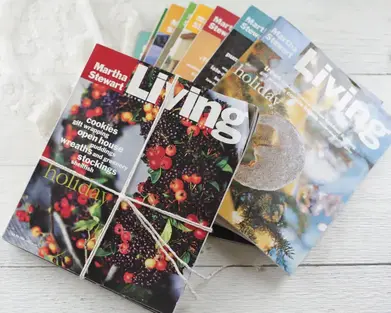
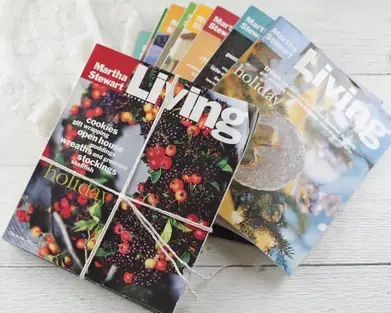
When the thick, slick Martha Stewart Living was queen of the magazine racks I was there for the Crafts: the rustic doorstop animals made of French linen tea towels; the velvet lavender sachets for drawers and for gifts. Soon I was sucked into the glossy paper vortex of step-by-step tableaux of Martha — in cropped jeans and crisp Oxford shirt — engaged in various Good Things like washing her paned windows using vinegar from a glass sprayer or sweeping her freshly-painted porch with a birch-twig broom. I was led to believe that people who weren’t already trained pastry chefs or architects could create the Halloween gingerbread haunted mansion, and that one day I too would have a fireplace mantle to display handmade snowglobes nestled between mason jars of glittered cedar boughs dangling with tiny crocheted snowflakes. Never mind that my wreath of pinecones tied with tartan ribbon and tacked to my apartment door wasn’t adding any rustic Christmas vibes to the purple-and-teal common hallways. This was all temporary.
I blame my dream-home fantasies on that OG influencer Martha Stewart.
When the thick, slick Martha Stewart Living was queen of the magazine racks I was there for the Crafts: the rustic doorstop animals made of French linen tea towels; the velvet lavender sachets for drawers and for gifts. Soon I was sucked into the glossy paper vortex of step-by-step tableaux of Martha — in cropped jeans and crisp Oxford shirt — engaged in various Good Things like washing her paned windows using vinegar from a glass sprayer or sweeping her freshly-painted porch with a birch-twig broom. I was led to believe that people who weren’t already trained pastry chefs or architects could create the Halloween gingerbread haunted mansion, and that one day I too would have a fireplace mantle to display handmade snowglobes nestled between mason jars of glittered cedar boughs dangling with tiny crocheted snowflakes. Never mind that my wreath of pinecones tied with tartan ribbon and tacked to my apartment door wasn’t adding any rustic Christmas vibes to the purple-and-teal common hallways. This was all temporary.
By the time Martha finished doing her five months for fraud, I was half way through 20 years in the same apartment, engaged in the more practical project of trying to live a creative life in a small space (sprawling in comparison to the majority of new builds in Vancouver). I ended up writing a weekly newspaper column on the subject and even partnered in a home re-vamp service that funded four years of art school. Dwelling design remains one of my Special Topics so when I heard first thing this morning (at the time of this writing) that the provincial government had released some free modular plans for small-scale multi-unit housing, I jumped onto the site for a look-see.
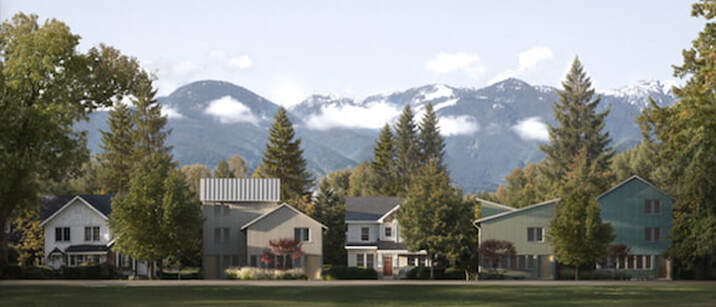
Streetscape concept of multi-unit integration with single-family homes, Standardized Housing Catalogue, BC Ministry of Housing
Because when it comes to affordable housing in this town, things can’t get worse (barring, of course, the imminent earthquake a.k.a. “The Big One”). According to one report, last year Vancouver’s median home price was more than 12 times the median household income, making it the third most expensive housing market in 94 cities around the world. Many of the investment units in Vancouver’s soaring glass towers are now languishing on the market, because even if they were affordable, “home” does not conjure up visions of 35 floors of stacked 500-square-foot rectangles with one wall for windows and no outdoor space.
The customizable building blocks are an attempt to provide an option to this modern-day warehousing of humans, a step toward addressing the missing middle between standalone houses and condo towers. They were developed following recent zoning changes that allow three or four units on the standard city lot, to the horrors of NIMBY owners in those single-family-home neighbourhoods and to cheers from developers. To curb design and construction costs and expedite the permitting process, the limited options of modular blocks are basic. One shows two bedrooms with a shared bathroom. The common-area block shows a surface that is both dining table and kitchen island with sink, with the rest of the kitchen along one wall. No balconies are indicated and there are not a lot of windows. Every unit shows stairs.
The customizable building blocks are an attempt to provide an option to this modern-day warehousing of humans, a step toward addressing the missing middle between standalone houses and condo towers. They were developed following recent zoning changes that allow three or four units on the standard city lot, to the horrors of NIMBY owners in those single-family-home neighbourhoods and to cheers from developers. To curb design and construction costs and expedite the permitting process, the limited options of modular blocks are basic. One shows two bedrooms with a shared bathroom. The common-area block shows a surface that is both dining table and kitchen island with sink, with the rest of the kitchen along one wall. No balconies are indicated and there are not a lot of windows. Every unit shows stairs.
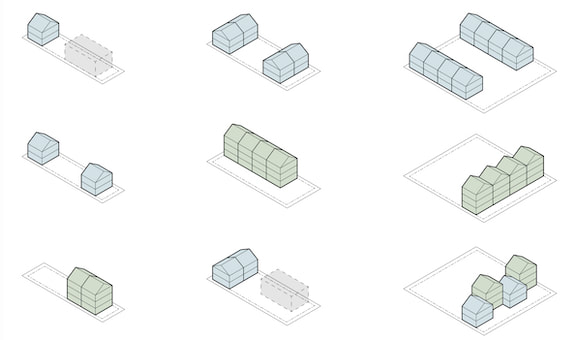
Placement options on various lot sizes, from the Standardized Housing Catalogue, BC Ministry of Housing
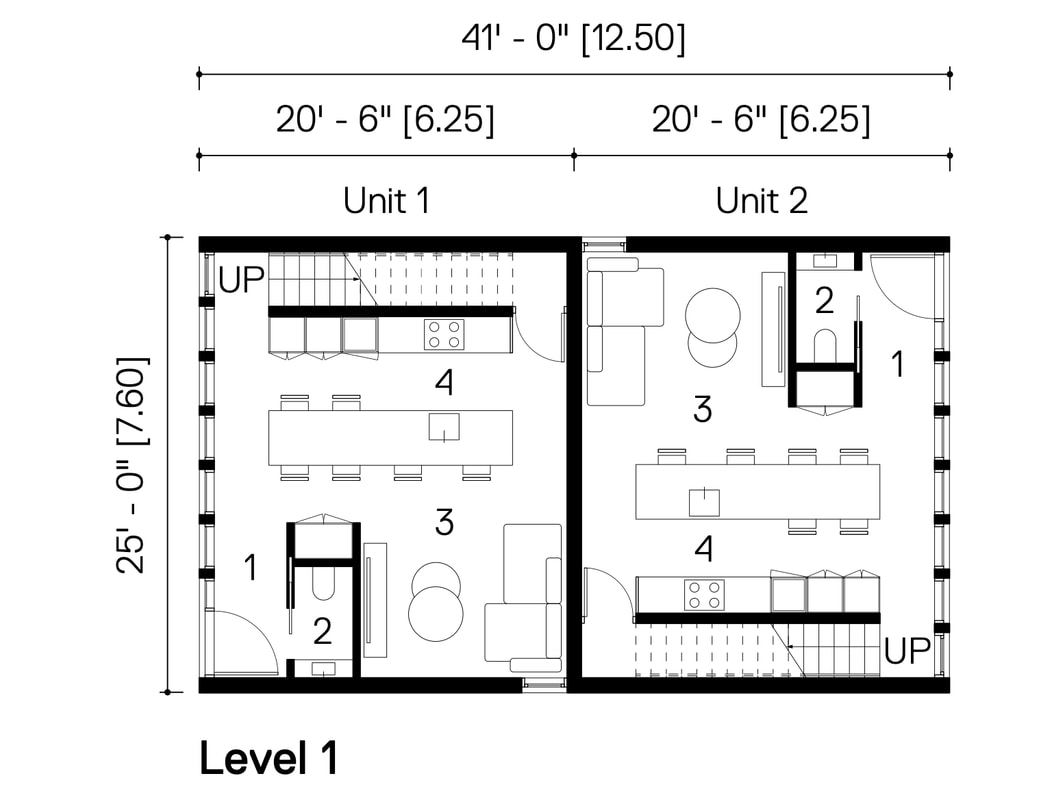
Common space options, Standardized Housing Catalogue, BC Ministry of Housing
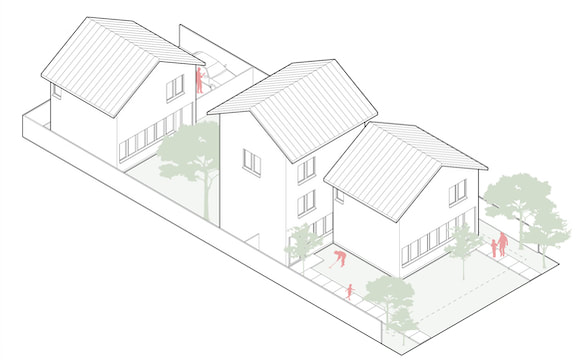
Multi-family dwellings on a standard city lot, Standardized Housing Catalogue

On the upside, they are connected to the earth and integrate into established communities. They open up the possibility of having a baby, aging in place, living with or beside other relatives or families of choice. They are the kind of home that might incline a crafty type to collect pinecones from the mature trees in those longstanding neighbourhoods and glue-gun a wreath to hang on the front door.
It’s a Good Thing.
It’s a Good Thing.
Recent Comments