
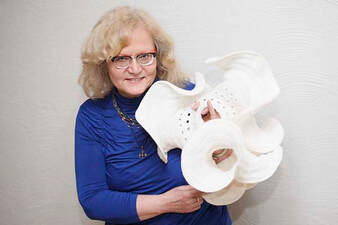
 Hyperbolic crochet, by mathematician Daina Taimina. Pic from rixc.org
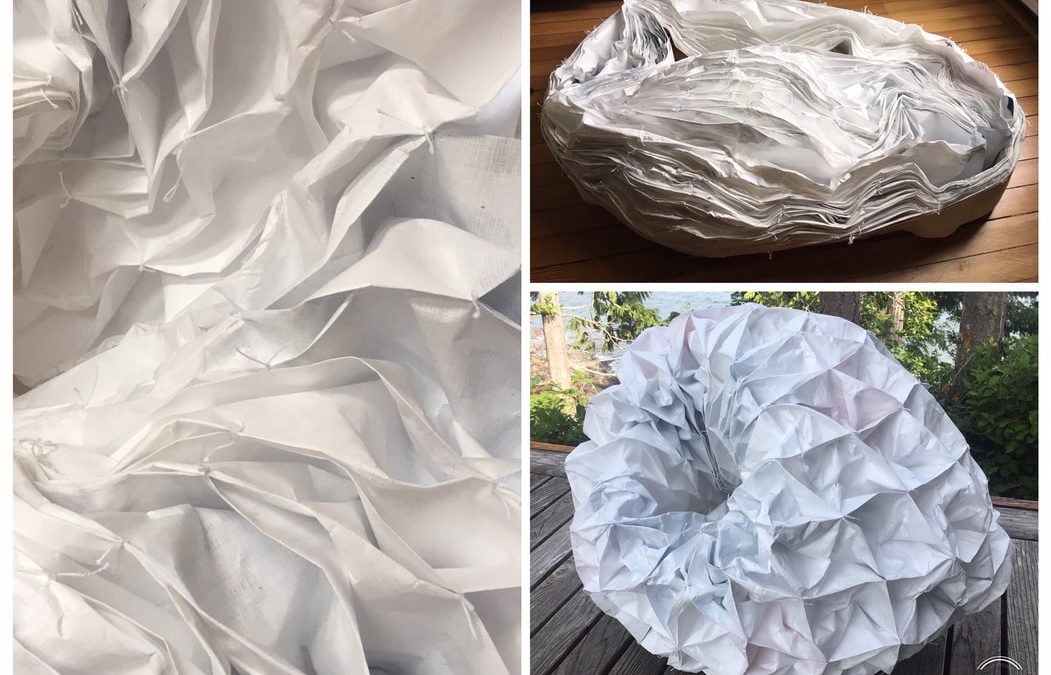
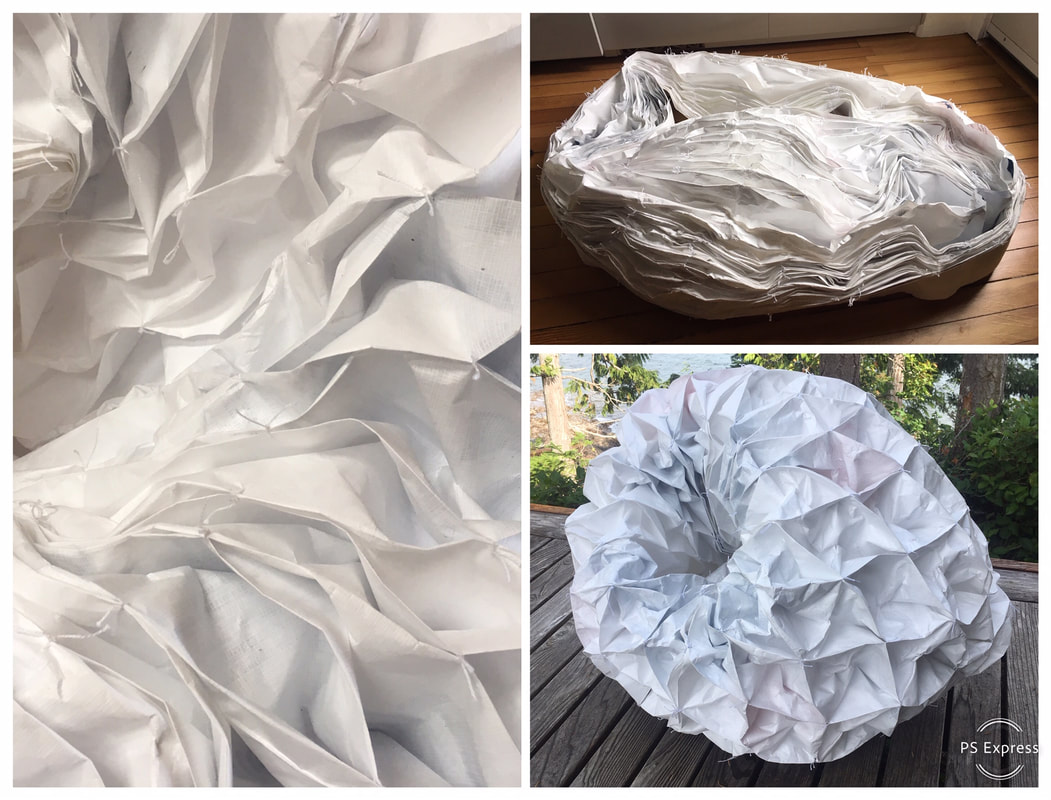
Most recently I’ve been fascinated by the sculptural potential of smocking that was once a feature of every little-girl dress before the fantastic elastic plastic age hit.
Smocking expands and contracts rigid material and turns area into volume. Best of all, it’s a slow-craft, inwardly-focused, rote activity that is an essential thinking tool for me: when the hands are busy (with something other than the damn iPhone) then the mind is free to wander. And where I’ve been wandering around these days is space, from the macrocosm to the microcosm.
For the last year I’ve been meeting regularly with a physicist and an engineer from the particle-accelerator lab at UBC and two scholars in the field of arts, for a project through Emily Carr University that explores the possibilities of ‘co-thinking’ or ‘hybridized thinking’ between artists and scientists.
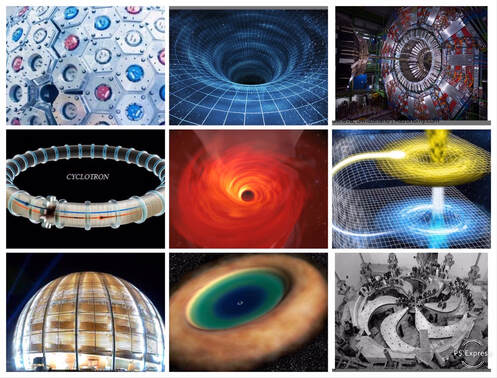 Circular patterns of the schematics of astrophysics and nuclear medicine are seen in the UBC particle-accelerator building itself.
So why not smocking?
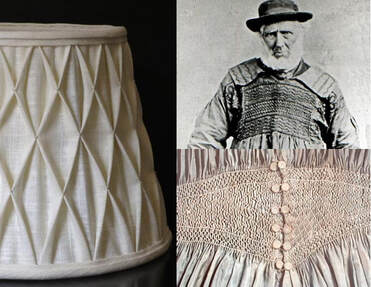 Material research includes reviewing the history and applications of an ages-old textile technique.
The shape that is taking shape is as convoluted as many of our group discussions, and sits in that unsettling space between pattern and chaos, structure and collapse. It’s as precarious as Leaning Out of Windows, the name of this four-year co-thinking project, yet tempting enough for the possibility of catching some new views.
Recent Comments