
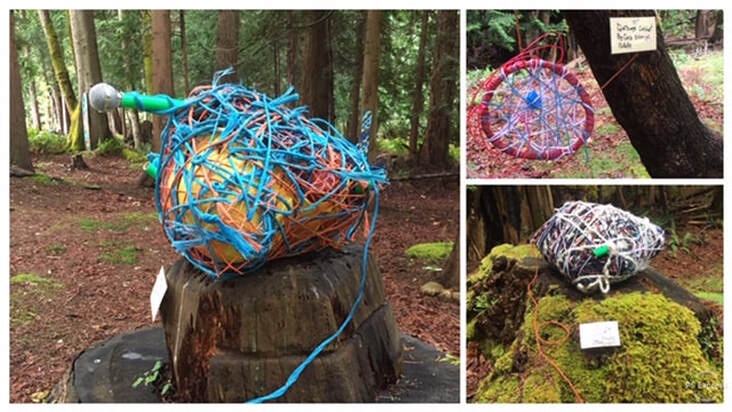
Even as I retreated back to my green, pristine Gulf Island I was hit with it at the end of the long drive through forest to the local dump: a mountain of garbage. This, from a small off-grid community known for its environmental consciousness.
My art practice is driven by a need to physically grapple with the unfathomable when words are not enough. In the strange way that an idea for an artwork takes hold, that sight of that mountain of petroleum-derived recycling-rejects led to my latest project: Foundlings.
For a while I’d been trying to land on a low-barrier, low-skill technique that could involve kids in the making of objects from found, non-recyclable and non-biodegradable materials. Then I landed on the work of late American sculptor Judith Scott, whose many exhibitions of her curious bound and woven fiber/found objects have led to discourse on “outsider” art, disability (she was profoundly deaf, non-verbal, and had severe Down’s Syndrome), intention, new sculpture forms and the privileged art world.
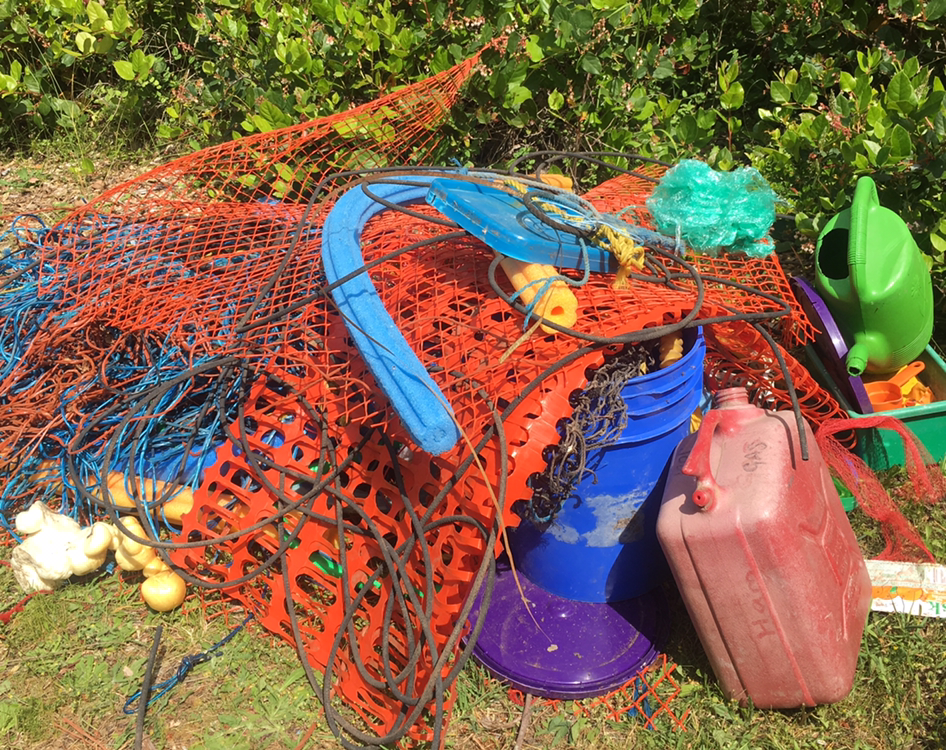
Within a month of escaping the art institution I was driving a pickup-truckload of colourful non-recyclable, non-biodegradable bits from the home-grown garbage mountain to the island’s only elementary school.
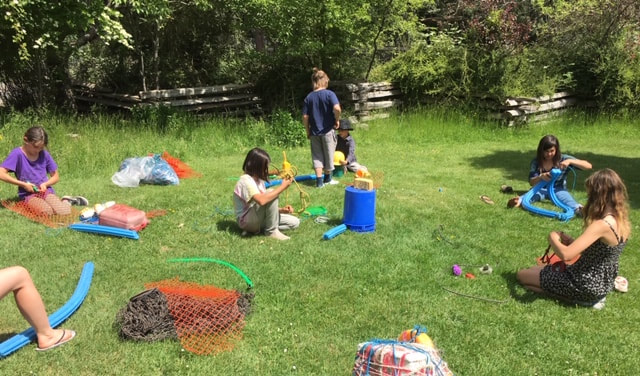
Before we got to the making part I sat down with the students and shared some images of Scott’s work for inspiration. We talked about how this artist’s method of wrapping, binding and weaving fibre around objects adds curiosity to what is on the inside. We talked about how working with familiar objects and materials in unusual ways can lead to new ideas. And we talked about how an object can be terrible and beautiful at the same time, does not have to be a recognizable thing nor have utility.
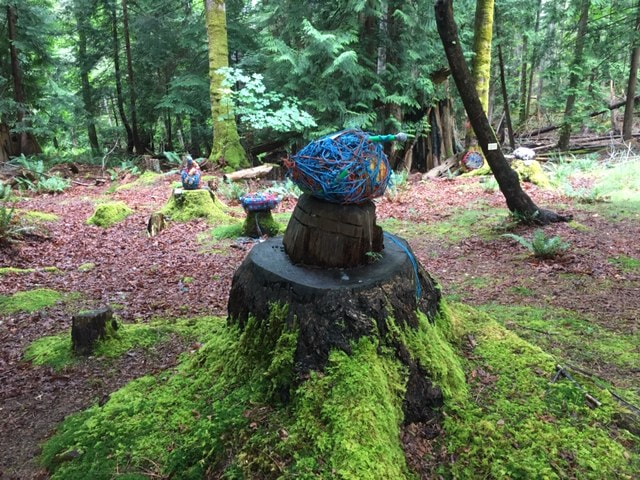
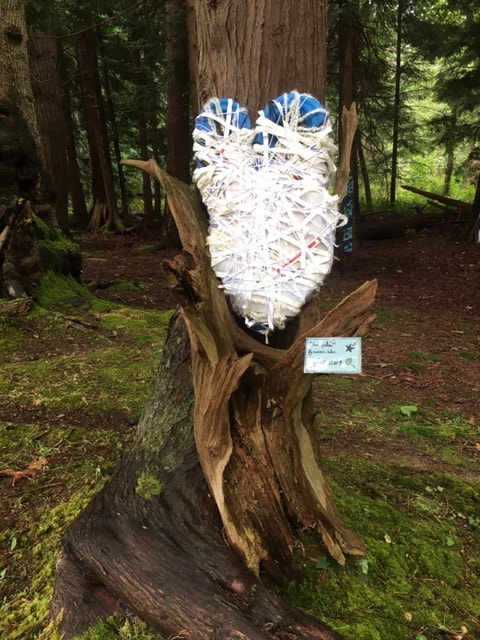
They each titled their pieces in their own hand and I installed them for exhibit on forest plinths (moss-covered stumps from the last big clearcut) in time for the annual Arts Fest. With no chance they’ll degrade in the weather they remain there, pretty and pretty disturbing: our inescapable stuff.
Recent Comments