public art exposed: a peek behind the scenes at new show

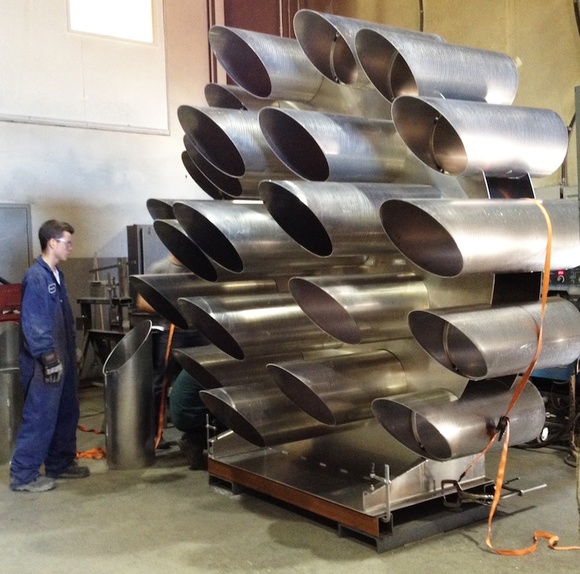
It’s one thing to dream up an idea for the back end of the elevated Canada Line track and quite another to see that dream come together in a mammoth aluminum sculpture.

PictureMetal fabrication at the Select Steel shop, Delta. Carlyn Yandle photo

So when I got my first glimpse of the progress of Cluster at the metal fabricators this week, the piercing clang and whine of the shop suddenly seemed to give way to the theme from 2001: A Space Odyssey. 

Whoa.

It was exactly as I had imagined it, except for the immensity. That something so voluminous could come out of a bundle of bubble tea straws was sort of short-circuiting my brain.

Well?, their faces seemed to ask.

“It’s… very… big,” I said, immediately thankful their earplugs spared them from hearing the bleeding obvious. 
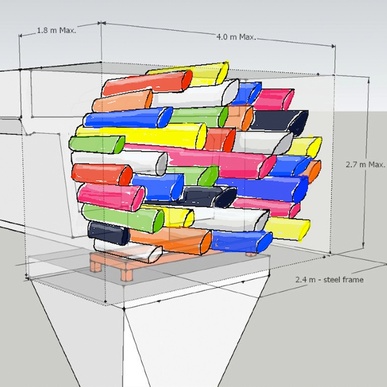

PictureCluster concept sketch (image by Carlyn Yandle)

Of course, no one sees these moments of shock, nor all the anxiety, revelation, frustration, obsession typical of the emotional swings that go into the creation of public artwork. When Cluster is hoisted into position next month, its narrative will be in the eye of the beholder, its entirety read in an instant.

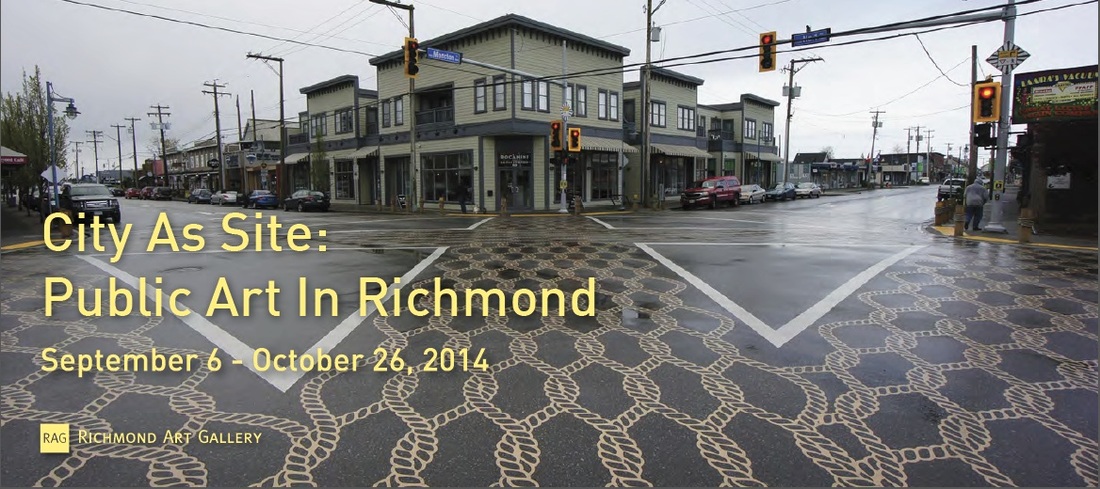
But a new Richmond Art Gallery exhibit (opening next Friday evening, Sept. 5) is pulling back the curtain on the process behind five public artworks that dot the city, in its City As Site show, curated by RAG director Rachel Lafo. Here is where visitors will see evidence of the beginning of the ideas that were pitched, developed, reworked, and finally translated into forms for public placement. Combined with that focus is a survey of all artwork in the local public sphere that is defining Richmond as not just another clutter of condos but a specific space in a particular time.
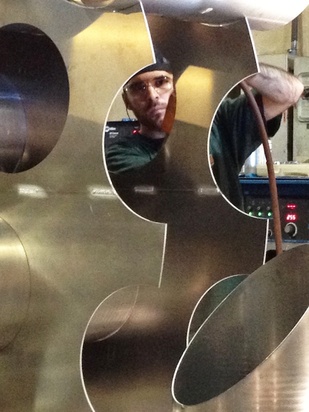

PictureMetal fabricator Jordan Thys at work. (Carlyn Yandle photo)

For me, laying bare some of my half-baked early concepts and awkward sketches that led to the development of Cluster (as well as the Crossover crosswalk design) is slightly uncomfortable but this is a warts-and-all display. Not shown is the high level of trust that must exist for any collaborative project to succeed: trust in one’s own ideas, the physical properties of the materials, the skill and temperment of  fabricators, the foresight of structural engineers, and the patience of the commissioning bodies. Public art projects come with the headache-y package of  issues of insurance, permits, budgets, timelines and many unforseeables. In short, it’s much more than a good idea.

Embedded in those physical projects is the intangible quality of faith. Cluster isn’t done yet, but I have faith that it will soon be a thing in the manufactured landscape that will spark conversation, which will connect people and by extension contribute toward a unique, vibrant community and cultural hub.

Fingers crossed anyway.