

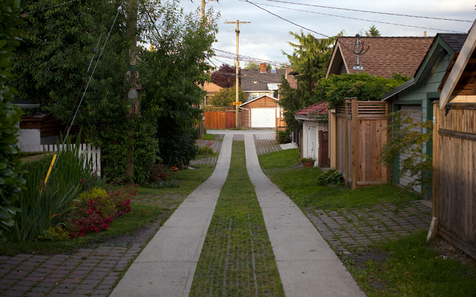
 One of a handful of Vancouver’s ‘country lanes’ from a 2002 pilot projects. (Photo: Ben Nelms for National Post)
And yet there is nothing like an untenable situation to spark a creative response. There is evidence of it in the spaces between, beyond, behind, or otherwise outside the scope of authority. You see it in neighbourhood back alleys and in the gaps between buildings all over the world: small, bold, personal gestures. It may start with a graffiti tag (I was here, The Man can stuff it) and evolve into jaw-dropping unauthorized artworks. It may start with that one condo-dweller with no outdoor space who drags a chair down to the street to do some sketching or practise guitar. Last year some folks down the block put out a table at the corner park and had a sit-down neighbours’ potluck dinner. Down another block is a Country Lane, one of just a handful of alleys transformed into a garden-like thoroughfare in a pilot project with the City back in 2002.
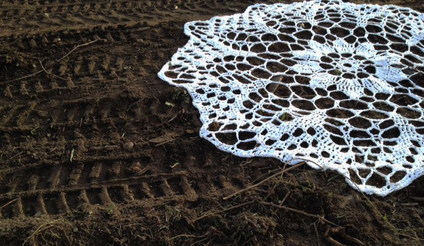 Day after destruction: Giant doily on the bulldozed community gardens in Kitsilano (Carlyn Yandle photo)
My community, like all Vancouver communities increasingly hemmed in by one glassy, luxury edifice after another, is under threat of becoming no place in particular.
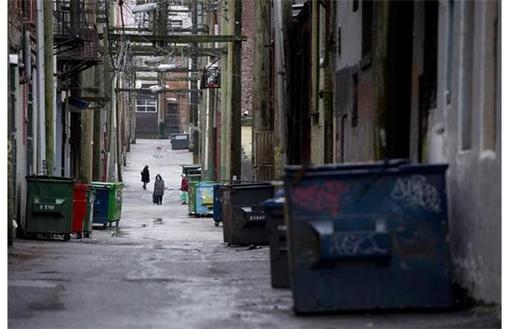 Vancouver’s downtown alleys are typically sketchy, soulless spaces. (Photo: Jonathan Hayward , Canadian Press)
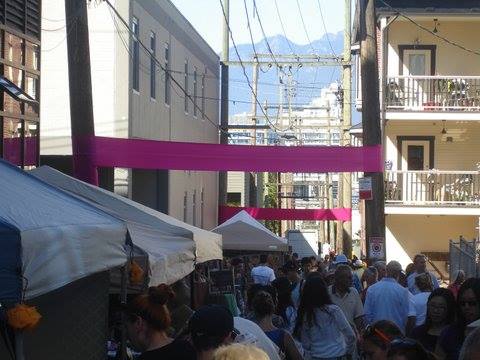 Livable Laneways has taken on the west alley on Main Street north of Broadway, with various temporary installations and community events.
I’ve been researching creative ways to carve out social spaces in the face of the residential-investment spree that’s taken over Vancouver. Even in the tightest spaces — or especially in the tightest spaces – humanity can grow and thrive. From the thinnest walkway container gardens in Kyoto to a laneway festival in one of our city’s dumpster-blighted back alley, there is potential in occupying a lost space.
Don’t just say something; sit there.
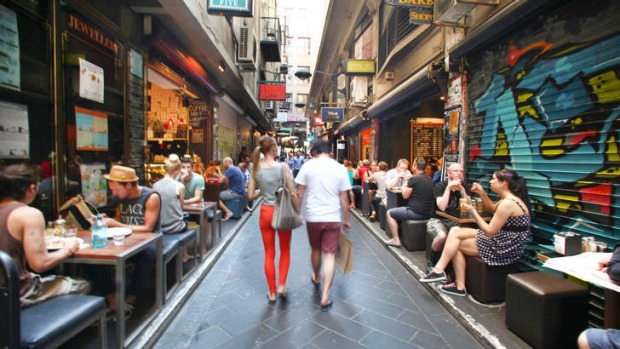 A laneway in Melbourne, Australia (Photo by Corbis via traveller.com.au)