
A friend of mine was a little obsessed with cleaning her carpeting in the condo she brought brand new several years ago. She seemed to be at constant war with her wall-to-wall. I always assumed it was her strong design aesthetic that drove her to splurge on a top-of-the-line vacuum-cleaner but I couldn’t figure out the vacuuming fetish. This month she finally broke the bank and had it all ripped out and replaced with wood floors. The installer sucked up 12 shopvac cannisters of dust from her two-bedroom unit. Clearly the carpet was installed before the unit was cleared of debris. Not really surprising if you live in a building that flew up in a condo boom, which is sort of how it happens in Vancouver.
A family member in the construction business says that when you’re part of a crew that is told you have to finish up and be out of one condo project by a Friday and show up at another on Monday or lose your pay, you do more than just sweep it all under the rug; you chuck all the bits of building stuff into the walls and drywall over the problem. If it were not for the whistle-blower involved in the Athletes Village mega development the uninsulated pipes hidden behind drywall would be leaking through several buildings by now.
Which brings me to “juxtaposition,” a key term in post-modernism that speaks to issues of globalism and consumerism in relation to art.
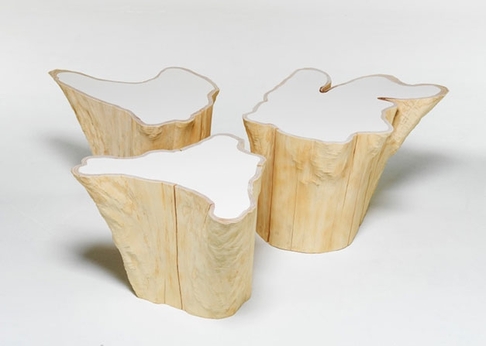
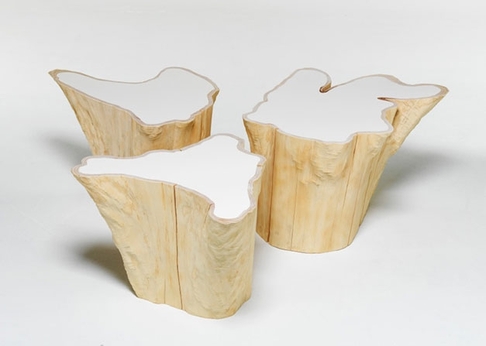
Bloom tables: Salvaged Western Red Cedar tree stumps filled with creamy organic resin
Against this backdrop of some seriously shoddy workmanship — even within those hastily-completed interiors — is a considerable number of talented, skillful designers who spend their days creating furniture pieces of supreme workmanship and beauty, as evident in last weekend’s Eastside Culture Crawl. The Bloom tables (right) by Mth Woodworks and Peter Pierobon‘s Plumb Pendant cedar lamps (below) lie in juxtaposition to the slap-dash boom-town antics.
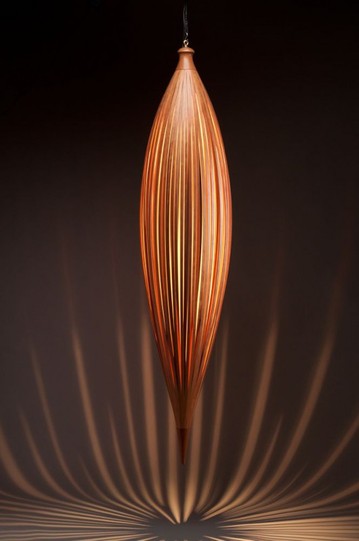
Against the clutter of cranes marking the current boom, these visual poems are more than lovely use items; they provoke us to consider the role and value of art in society.
They are fully realized form and function against a speculative-market-driven built environment.
They are fully realized form and function against a speculative-market-driven built environment.
Recent Comments