
Handmade quilts of found fabrics layer up multiple meanings
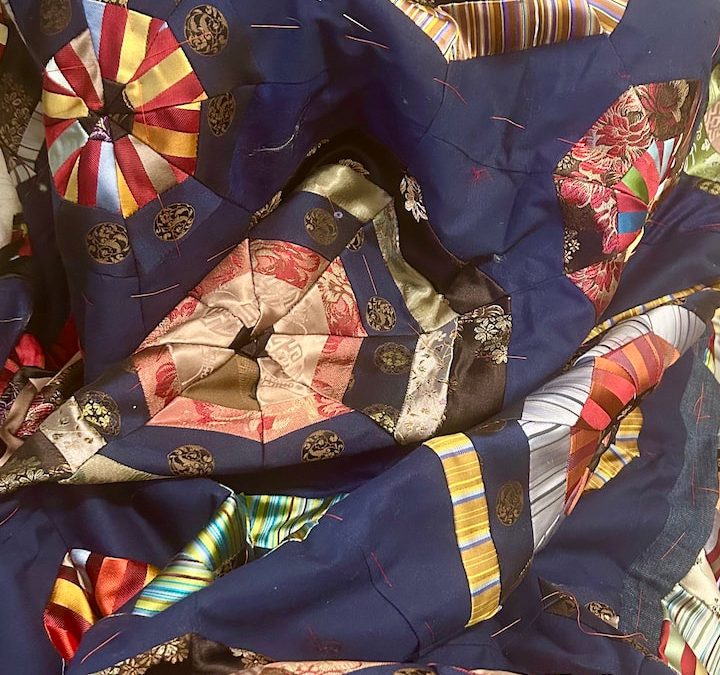
The squirrels that inhabit my head have been threatening to start a roller derby so I’ve shut it all down by doing something constructive: I’m literally wrapping myself up in my ongoing Perfectly Imperfect quilt project.
I’m a construction team of one these dark days, bound up in binding together found satins, brocades and denim with cotton batting and mattress ticking. In this inherent need to make, I am a lady-in-waiting, making myself useful while the MAGA/Trump/tech-oligarchy snarl takes hold later this month.
I’m a construction team of one these dark days, bound up in binding together found satins, brocades and denim with cotton batting and mattress ticking. In this inherent need to make, I am a lady-in-waiting, making myself useful while the MAGA/Trump/tech-oligarchy snarl takes hold later this month.
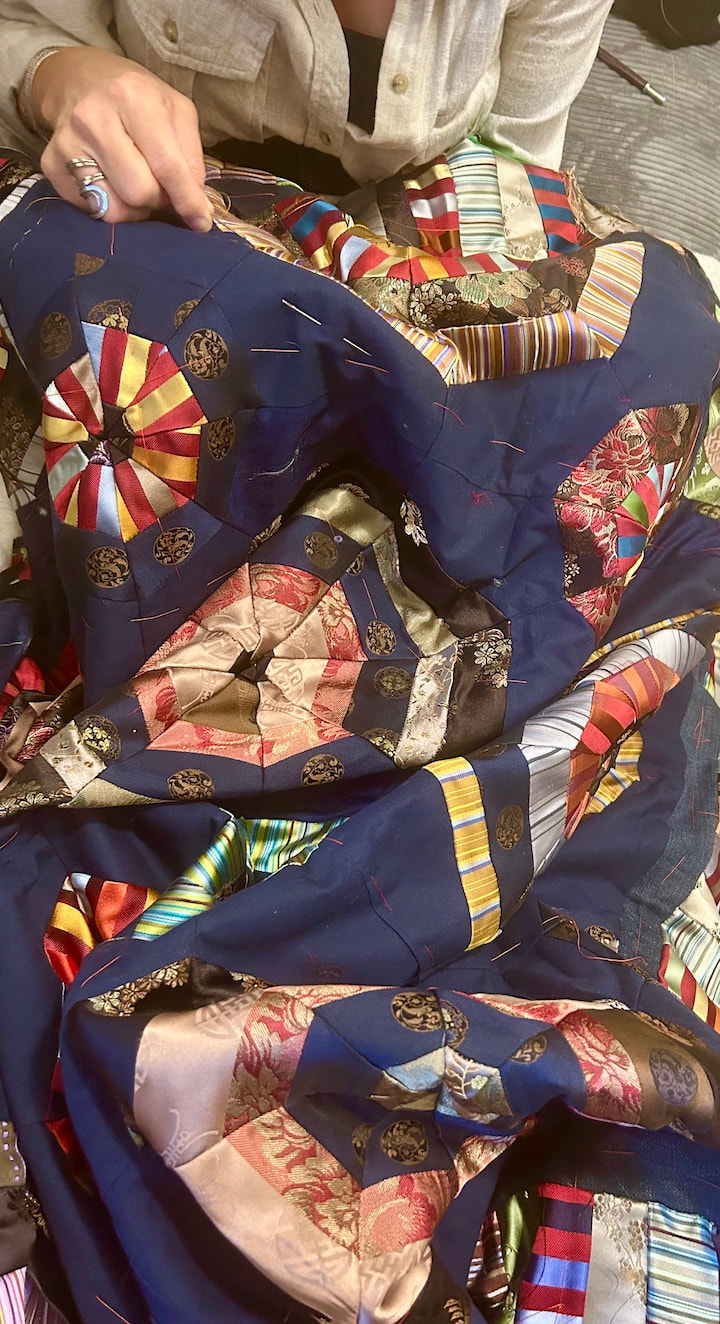
Hand-stitching around design elements that are more sawtooth than circular in the Perfectly Imperfect quilt.
I made my first quilt out of old bedsheets and pillowcases as a teenager for my little sister shortly after my mother gave me my first sewing machine and before I knew what I was doing. When my skills were adequate, I advanced to birthday and Christmas gifts and my own homey items like table runners and cushion covers, then moved on to crib quilts for babies, many of whose names I’ve forgotten and are now in their 30s, and for weddings for couples who are still together or have since divorced.
Many moons ago an aunt gave me a spiral-bound notebook with a picture of a quilt on the cover so I used it to stuff in all the photos, notes, design sketches and written correspondence related to each project. I see this book now as a personal history of learning about pattern, colour and cloth. I try not to wince at the early projects in the way that you should not berate the kid you once were. That bulging notebook is as multilayered as the under-construction Perfectly Imperfect quilt. Both are useful, improvisational objects embedded with explorations in form and function, and memories of the endurance, joy, frustration, satisfaction and an acceptance that the maker herself is a work in progress.
Many moons ago an aunt gave me a spiral-bound notebook with a picture of a quilt on the cover so I used it to stuff in all the photos, notes, design sketches and written correspondence related to each project. I see this book now as a personal history of learning about pattern, colour and cloth. I try not to wince at the early projects in the way that you should not berate the kid you once were. That bulging notebook is as multilayered as the under-construction Perfectly Imperfect quilt. Both are useful, improvisational objects embedded with explorations in form and function, and memories of the endurance, joy, frustration, satisfaction and an acceptance that the maker herself is a work in progress.
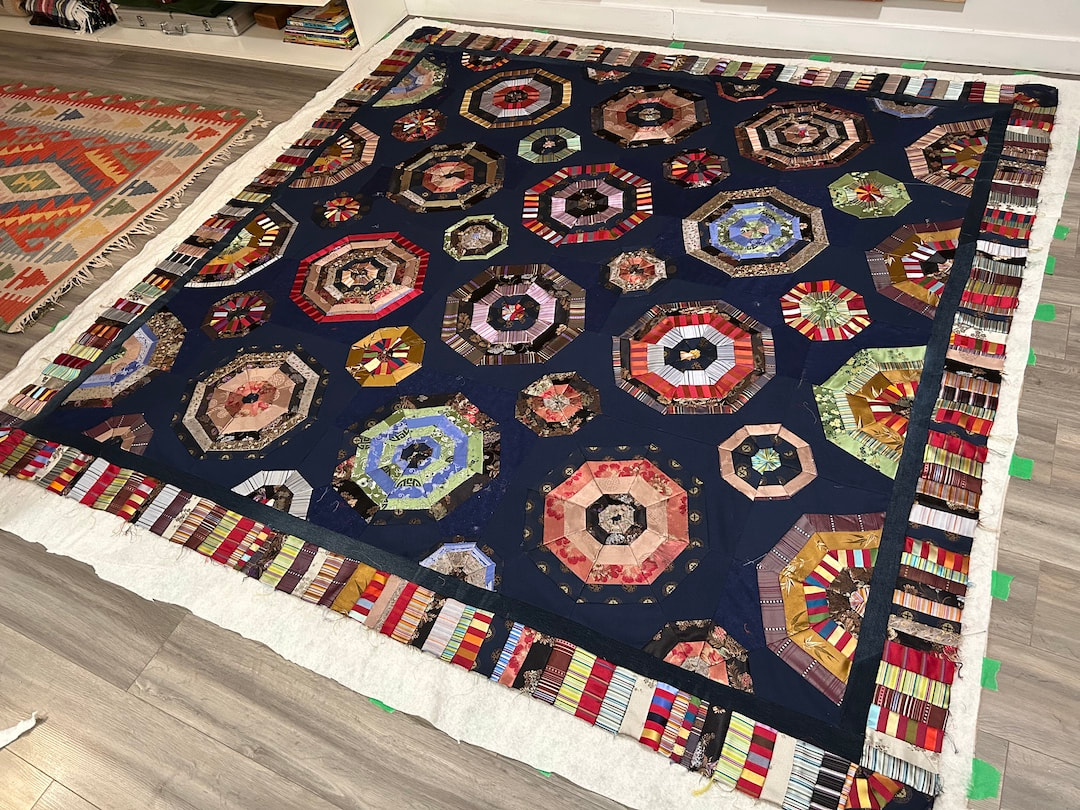
Laying down the layers for basting in place. An added border of string-pieced satins and silk echo the inner design and bring the quilt to my preferred dimension of queen-size.
By the time I left the newspaper and started art school the notebook was full so it felt like the end of those life chapters. I relied on some of those skills to lead hand-stitching sessions during post-graduate work but it took a pandemic lockdown to see the connective power of quilt-making. Friends and strangers found ways to share unwanted fabrics via drop-offs and pickups through social-media groups and met up online for hand-stitching sessions that opened up a safe space for talking through these curious times.
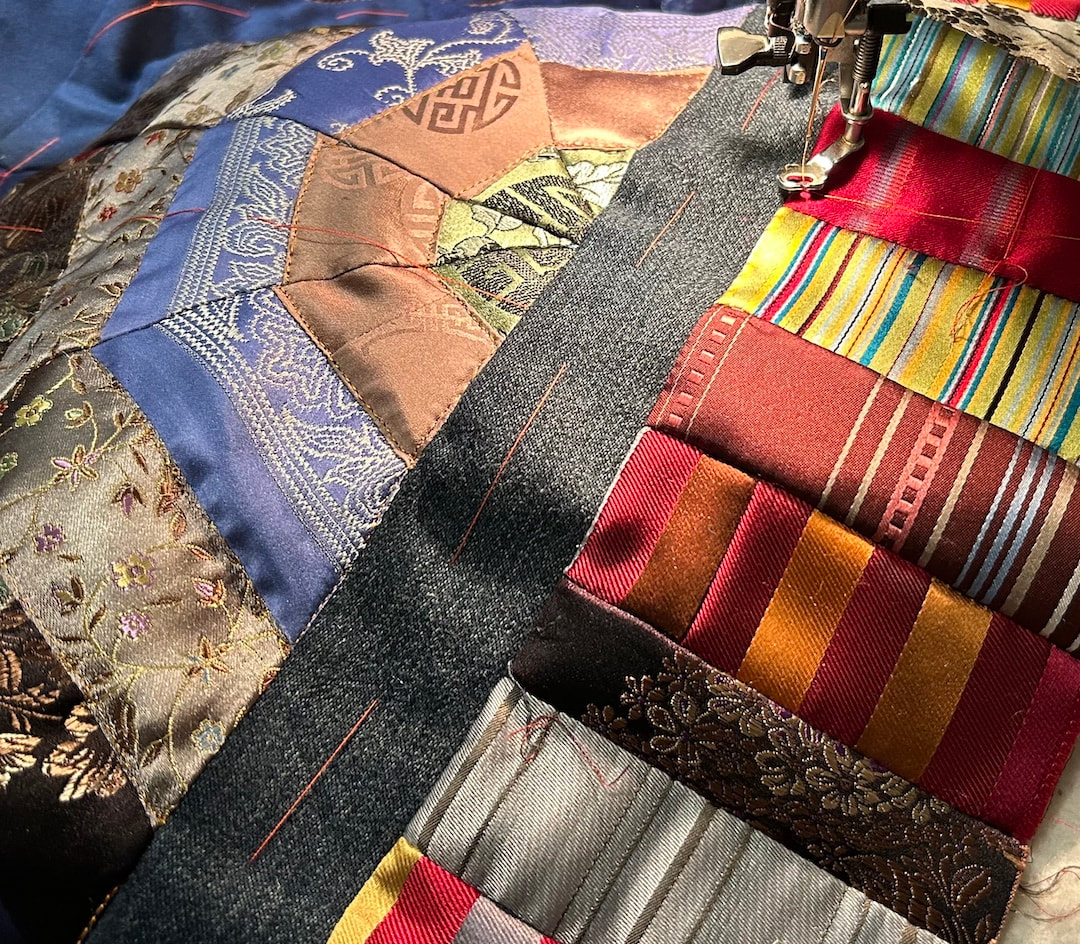
For those of us without a long-arm sewing machine, ‘in-the-ditch’ machine-stitching a queen-sized quilt is an endurance test.
I finally bought another spiral notebook and started gluesticking in photos and design sketches from my more useless quilt-y artworks. Then two years ago last Fall, after increasingly difficult weeks caring for my brother, I pulled out a stack of six-inch-square blocks in a pale palette of aqua-blues, creams, greys, and pinks left over from my 16-year-old nephew’s crib-sized quilt. I grounded the palette by adding twice as many matching blocks in earthy browns and navy blues, stitching them all into rows and then into a queen-sized quilt top. I call that one Rough Patch, fittingly unfinished.
A quilt makes its mark at births, birthdays, seasonal holidays or political moments, marriages, friendships, illnesses and in remembrance. I like the idea of a quilt for a new human who isn’t here yet or may arrive after I’m gone. Imperfectly Perfect, composed of unstable, slippery, fraying fabric scraps and made during the time when Americans fell for the grift of the century, feels like it’s for that person. I hope they like it.
A quilt makes its mark at births, birthdays, seasonal holidays or political moments, marriages, friendships, illnesses and in remembrance. I like the idea of a quilt for a new human who isn’t here yet or may arrive after I’m gone. Imperfectly Perfect, composed of unstable, slippery, fraying fabric scraps and made during the time when Americans fell for the grift of the century, feels like it’s for that person. I hope they like it.
Recent Comments