
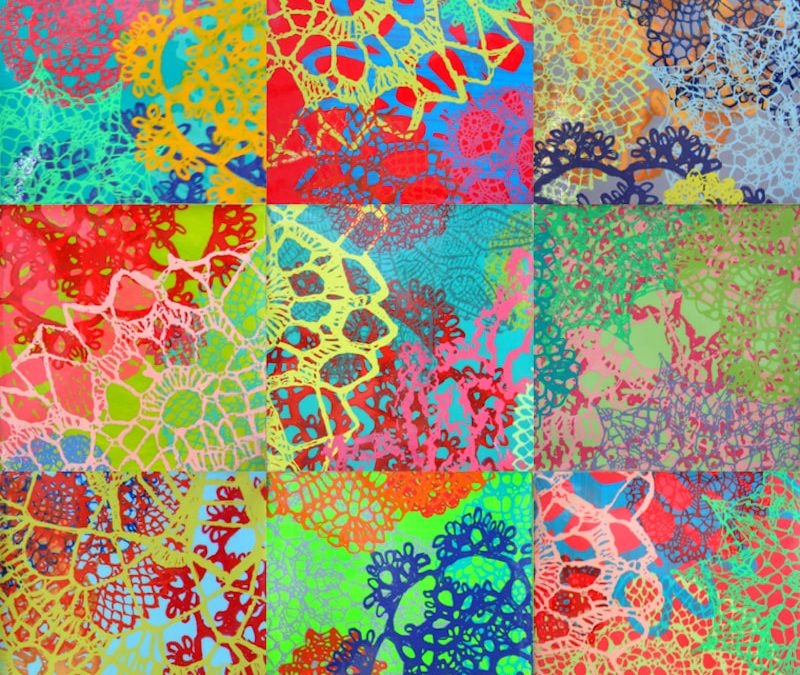
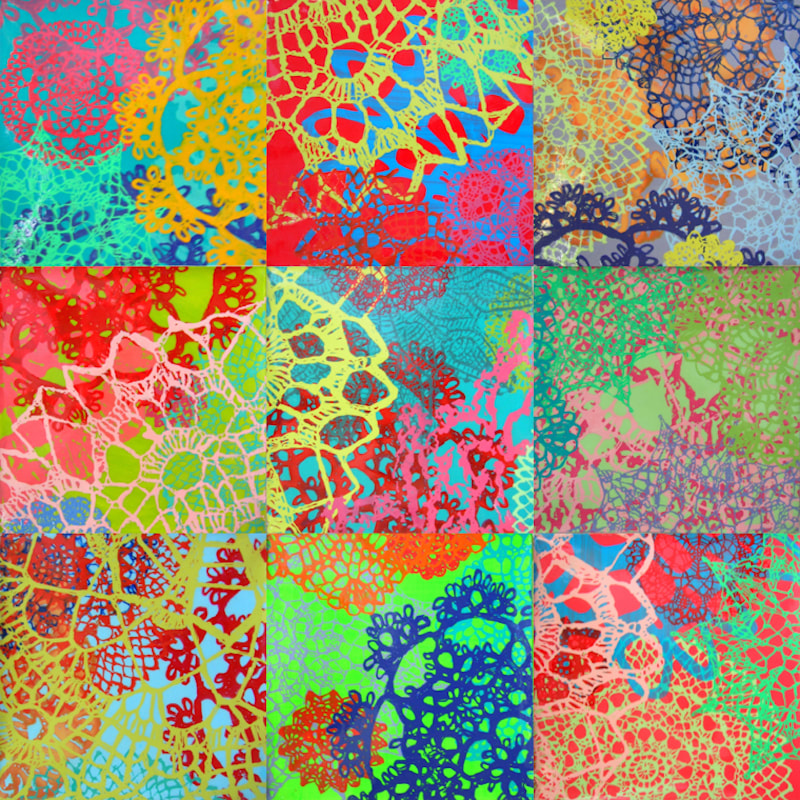
It had a benign beginning eight years ago: to approach painting like making a quilt. It started when I discovered I could pour viscous acrylic paint onto acetate and drop in colours and patterns from squeeze bottles. When dried, the smooth skins could be cut into to create more patterns, peeled off the acetate and layered one on the other on stretched canvas. This was a revelation! Unlike the pre-planning required in designing and building quilts I could create my own pattern design — mostly freeform — on the “fabric” (skin) and add layers as I saw fit. The only tricky part was maintaining a mirror-smooth surface for all the layering so to avoid bubbles and ripples I poured on poly resins after each layer. Eventually I was breaking all budget goals buying it by the tub.
I never gave much thought to what went into those pricey bottles and buckets of artist acrylic colours. They’re all fairly odorless — not like oils with their cleaning solvents — so I figured it was just a matter of some pigments in an innocuous carrier. I didn’t wear gloves when I painted. I poured the jars of rinse water for my brushes down the sink. I cleaned my palette by running it under the tap. I don’t recall any instructions to do otherwise in painting class. It was only years later that I understood that washing and rinsing delivers microplastics directly past any wastewater treatment and into our rivers and oceans and into the life cycle.
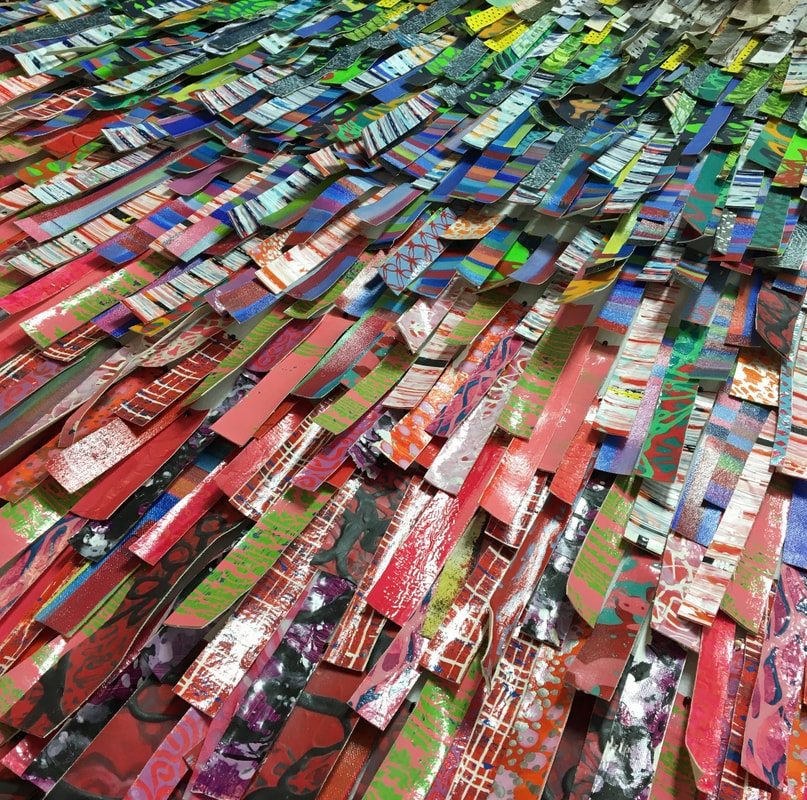
Over the next several months I explored how to work with the flaring painting strips. I covered an entire post in just the red strips to look like it was on fire. I built up a mass of blue strips in a dead corner and dispersed some others out over the walls like an infestation. For an MFA class critique I created a lurid petrochemical sunset in a human-scale circle:
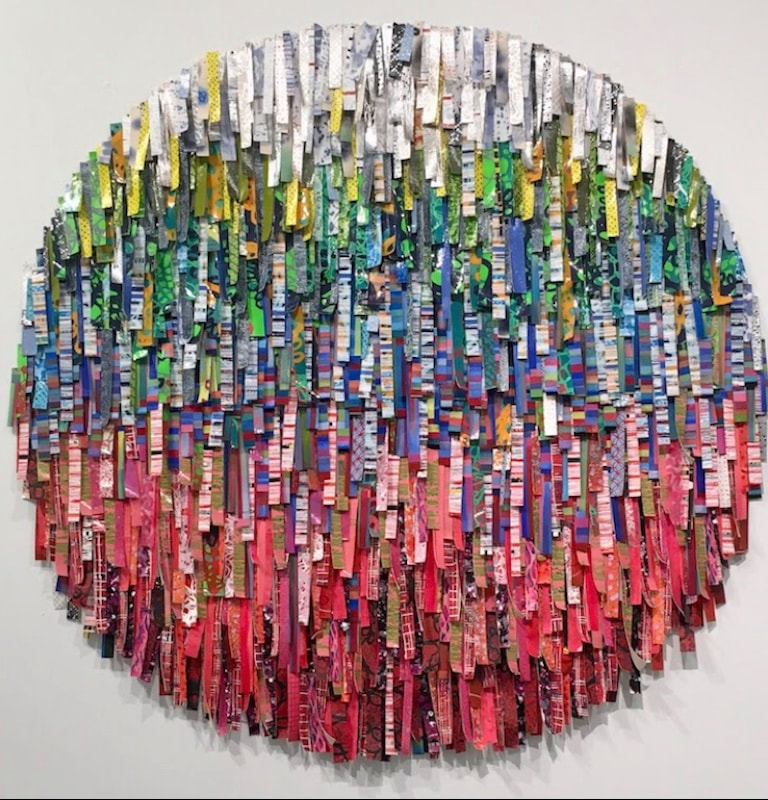
The success of an artwork lies in its ability to offer resonance and that’s how I’m viewing this one since the world is suddenly soaking in the biggest global energy disruption in history. “This isn’t just about gas and the black oily stuff,” The Guardiansenior international reporter Peter Beaumont said last week. It’s about pension investments and fuelling the car. (Listen or watch the short interview.) “It’s about every corner of the economy: the flights we take to go on holiday, plastics. It’s everything. It’s kind of staggering that no one thought this through.”
Here on the other side of the Atlantic Ocean we are not expected to feel the crisis as deeply; North American petrochemical producers are “relatively insulated” from the energy crisis because they rely more on domestic supplies. But we should want to make some lifestyle adjustments anyway. Out of that necessity comes creative thinking, the key element missing from my scrap-quilter’s approach to painting. Apocalypse Now continues to serve as a visual reminder of the hazards of buying into unsustainable systems and the joy of gathering, in the art of making something out of nothing.
It’s time we stop / Hey, what’s that sound? / Everybody look what’s going down…
Recent Comments