
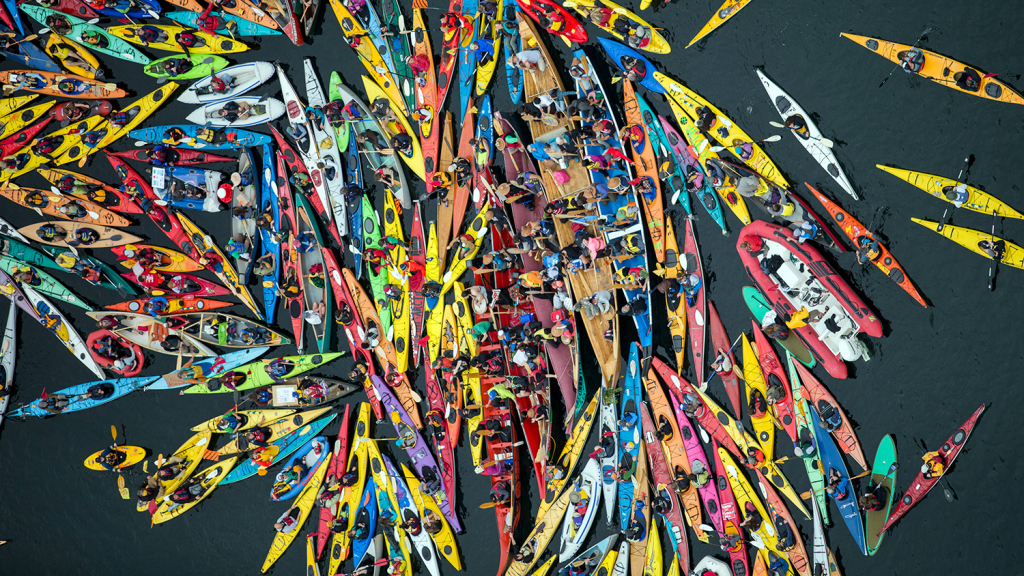
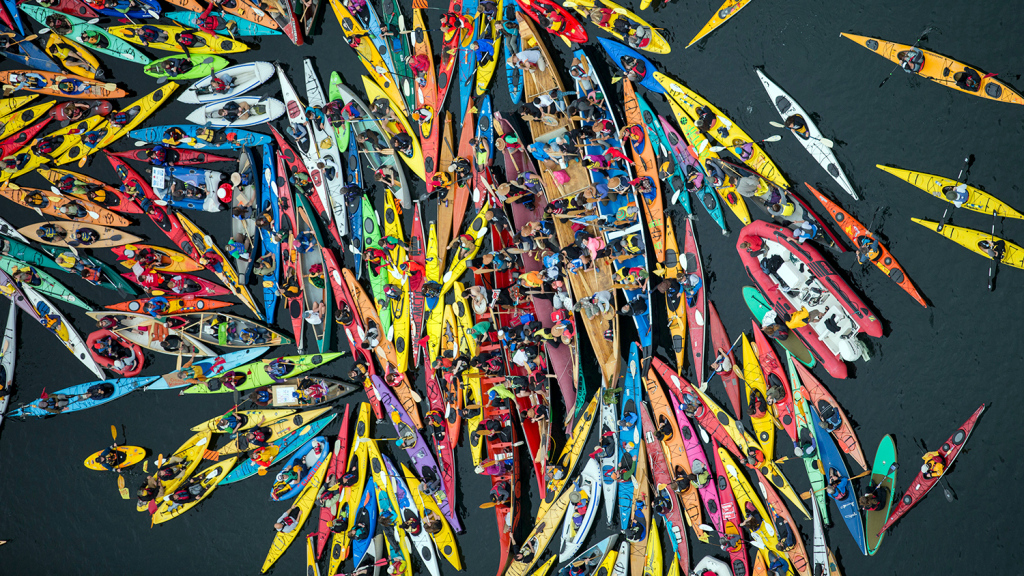
My mother shared the above image in a Facebook link with me because she knows what makes my heart go thumpety-thump: a dazzling visual pattern tied to a hefty underlying concept.
 @billmckibben shared this staggering image on Twitter.
I and thousands of other social media users were seduced to hitting the Grist hotlink to view more photos of the kayaktavists‘ protest of Shell Oil’s monstrosity that arrived in Seattle’s port the Saturday before last.
You had me at yellow.
You had me at yellow.
But I’m more captivated by the increasing power of those images to effect change. (#sHellNo)
“Your mom and 58% of Americans are on Facebook” screams the USA Today headline. And three out of 10 of them get at least some news while they’re connecting with their Friends, according to the venerable U.S.-based Pew Research Centre.
Speaking of images that send a point home:
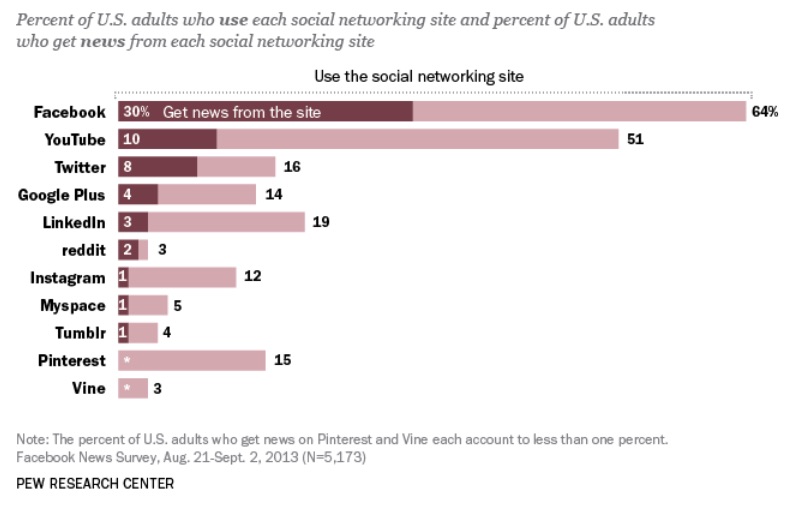
The Pew research shows that 78 per cent of Facebook news users “mostly see news when on Facebook for other reasons.” It’s that seductive power of images that is changing the news agenda and the media landscape. Long gone are the days when corporate media could control the flow of information to keep their advertisers happy and their friends in political power. Individual access to compelling still and moving images is taking on the status quo. It may start by tripping over a single powerful image but it can lead to a whole new era of information-gathering, where images are too pretty or pretty horrifying to resist clicking on for more info — and often too close for comfort:
Recent Comments