
 Carlyn Yandle photo
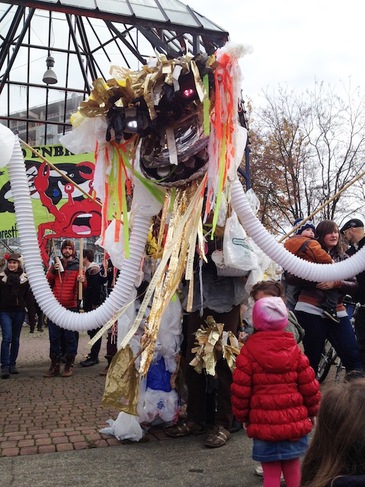
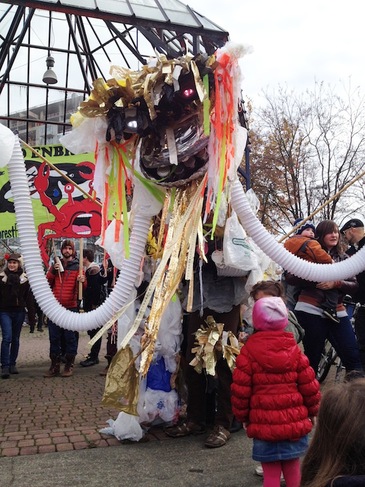
Art is outside the billions of dollars sloshing around the world’s art investors; it’s in the streets, provoking those who hold the purse strings and the power. You can see it in humble objects, like the garbage monster that prowled around the anti-pipeline rally last weekend at the end of False Creek, towering over the thick crowd, snapping its messy maw at excited kids. It’s not pretty, and it certainly has no retail value, as it’s made of the usual stuff that ends up in the Pacific Gyre, but it functions as art has and always will. It provokes us to think differently, to re-consider, step out of our complacency and see the world for what it is and where it is headed or could be. This is the power of the visual object.
The makers (presumably the two operators) of the garbage monster were compelled to express themselves through their creativity and labour, with no profit or prestige motives in mind. The object serves to contest the ways and means and plans of those in power, in this place, at a time when the news broke that Canada is dead last in climate change policy in the developed world. It may be a small gesture, but when combined with other creative forms of expression, can turn the tide.
 Carlyn Yandle photo
That pretty much has been the history of artists. Their work may have no cash value, but their value to society is priceless.
Recent Comments