
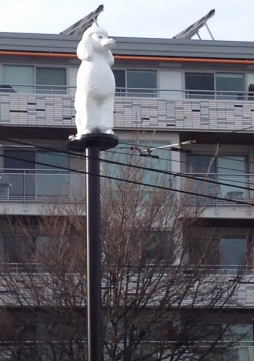
God, I miss the newsroom sometimes. When that kind of photo lands on your desk (so to speak) you do a little happy dance. This is the money shot, the hook into a hot little story, the art that guarantees the front page of a community paper. And the alliteration in the scrawled sentiment doesn’t hurt either.
|
It’s the kind of story that has the community buzzing, the phones ringing, the (e-)letters pouring in. It has, as they say, legs. It promises follow-up stories with new angles, fresh emotions. It fends off the greatest fear for an understaffed newsroom: crickets. (Watch how a CTV news story adds fuel to the fire.)
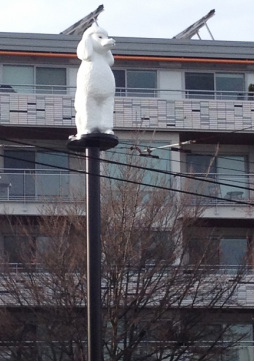
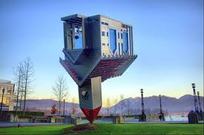
Successful public art does the same thing. Love it or hate it, it gets people talking, debating, engaging. As I write this the tweets for #MainStPoodle have neared 1,000 since the pooch made the papers. (My December post on the freshly erected poodle is here.) |
|
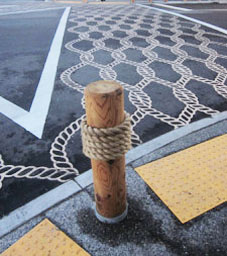
I wonder because I felt that pang of rejection as I was photo-documenting the installation of Crossover, the scramble-style four-way crosswalk in Steveston in 2011. My design was an attempt to weave together the history of the Japanese net-makers and the modern-day marine flavour of this corner of the Lower Mainland using a simple, enduring motif. I was not prepared for the few individuals who showed up while I was snapping photos, griping at anyone within earshot that this was a colosal waste of taxpayers’ dollars, not to mention a safety hazard. (I’m not so resilient that I could resist following up on the hazard part and I’m relieved to learn it’s a safety improvement.)
The other day an artist friend who had to return to the salaried workplace said she never realized how much rejection she had to deal with as a full-time working artist. I’m starting to see that this business ain’t for sissies.
Recent Comments