Mushrooms and more for troubled times
When you spend a good portion of your winter cowering from the cold and the rain, it’s hard to fathom the fiery desert winds that are obliterating entire neighbourhoods just a three-hour flight south. In the near-real-time images and video only chimneys, mangled metal and concrete driveways hint at what used to be.
But then you notice the vestiges of palm trees, bougainvillea vines, laurel hedges, tufts of sisal and succulents. Before the last tendrils of smoke dissipate and the insurance battles begin, these plants hold the promise that buds and leaves will sprout and new colonizer species will emerge, boosted by an ashy soil. They are a reminder that whether it’s our perilous planet or our own contorting guts, flora heals.
This front line in ground recovery is below the surface, a mycelium network of fungal lace that can erupt in reproductive spores, most noticeably after wildfire as a bright orange carpet of tiny caplets.
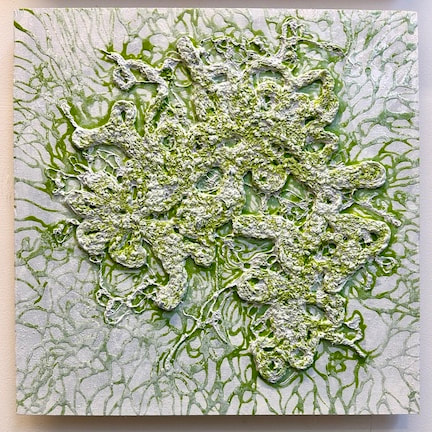
Mapping entanglements: Crocheted cotton, acrylic on panel, 12”x12” (Carlyn Yandle)
Mycelium is all the rage these days, embraced for its regenerative properties. I may be a little disturbed by the tiny fungal ecosystem flourishing in a dark corner of my damp art studio, and mushrooms on my tongue may feel like phlegm balls, but I get excited at the news that mycelium is being explored to fight cancer cells and alleviate physical and psychological trauma.
The earth-sustaining potential of mycelium is unlimited: just one bus-ride away from my studio, at UBC’s Biogenic Architecture Lab, bricks and other building
materials are being made from edible fungi like oyster-mushroom mycelium; the late actor Luke Perry’s final wish was to be wrapped up in mycelium embedded in a Mushroom Death Suit for his green burial. (And he was.)
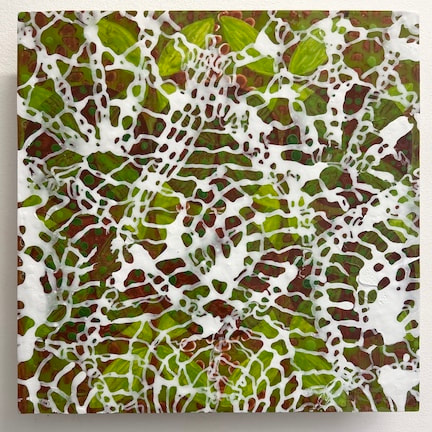
Mapping entanglements II: acrylic on panel, 12”x12” (Carlyn Yandle)
Mycelium spores, unlike seeds, are resilient to toxic compounds, high temperatures, drought and radiation — food for thought as footage of those Los Angeles homes, typically composed of and containing a wide array of synthetic polymers, go up in poisonous, cancer-causing smoke.
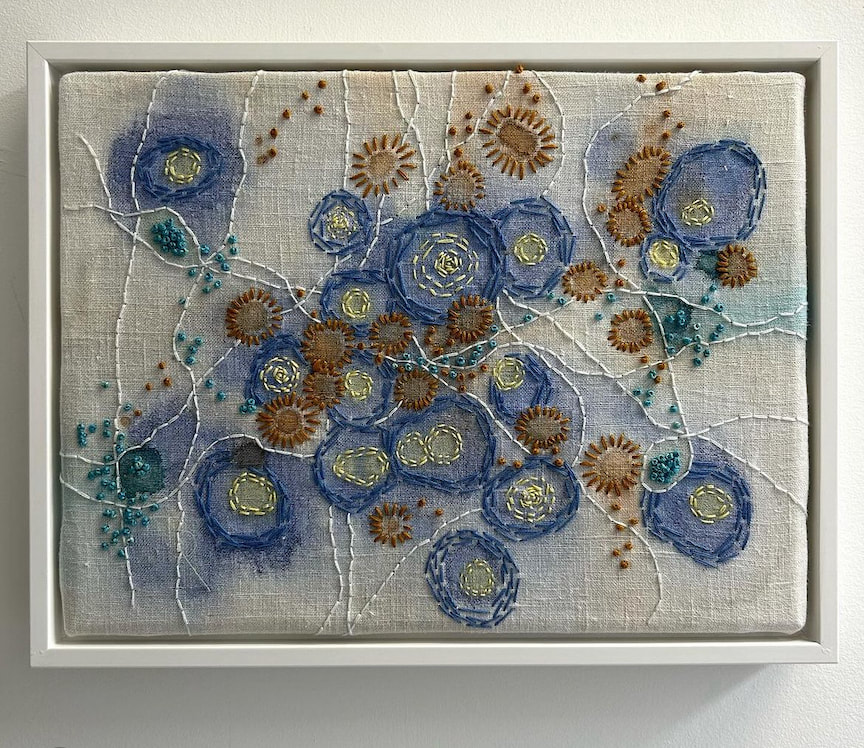
Spore: Acrylic and mercerized cotton thread on found linen, 12”x 9” (Carlyn Yandle)
I see mycelium as a pattern for social regeneration after natural and unnatural disaster and scorched-earth policies. Its spreading network of tendrils mirrors our innate need to connect with one another, finding and nurturing our common ground despite divisive forces. Those thickening entanglements bring comfort and joy because we are pack animals. It is in our human nature to come together; we can see it right there in the aftermath of LA fires.
We may be on shaky ground but I can feel the rumblings as we emerge/erupt/bloom, mycelium-like, when the conditions call for fresh energy. Bloop! Bloop!

Recent Comments