
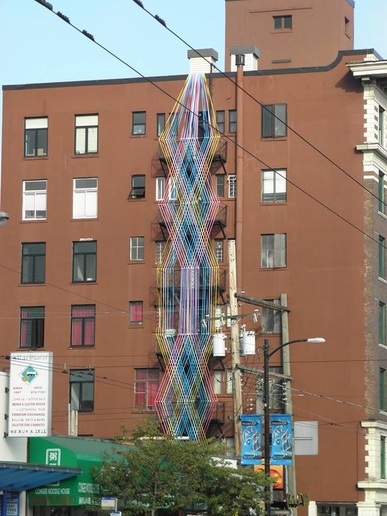
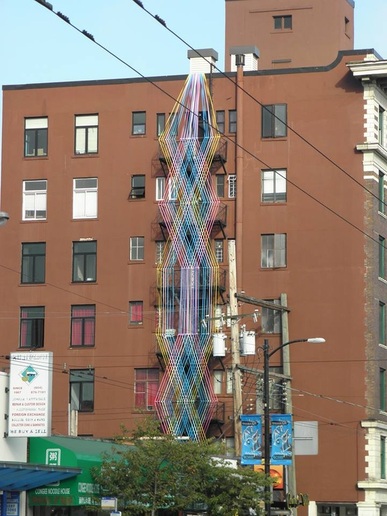
Whispering to get attention isn’t easy in an image-packed urban landscape where slick marketing messages infiltrate our entire field of vision, from pop-up ads on our screens to the clutter of billboards.
There’s so much of it that we subconsciously absorb, dismiss then ignore each image as we move through the visual bombardment. And we wonder why we’re mentally exhausted at the end of the day.
That’s what makes the experience of public artwork in the city landscape so compelling. No call to buy or to back a product or political organization or private enterprise. With no aspirational words (Believe! Passion! Simplify!) or branded images, logos, phrases or text of any kind to cue our automatic-piloted brain to overlook the visual image, a slight confusion sets in. Whoa. What the hell is that?
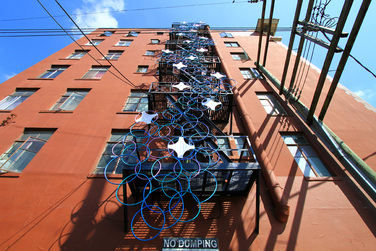
These message-free images that appropriate buildings and billboards are enough to compel viewers to investigate further. Turns out Miletic-Prelovac’s work was this year’s commission to highlight the livable laneways movement. And Burtynsky’s images are from his latest book and new documentary, Watermark.
No logos. No brands. No text. These are whispers that can create a small roar.


Recent Comments