
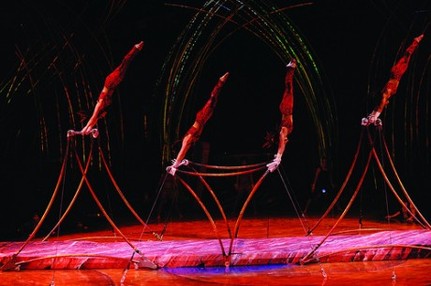
Amaluna also has an operatic storyline but I looked past that to better focus on the abstract. Narratives can be distracting, in the same way that lyrics in music distract me when I’m in the middle of a creative process. Instead, I let the spectacle of sound, light, and unimaginable feats of the human form wash over me.
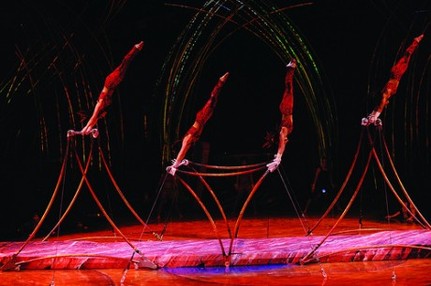
I was close enough to the stage to feel the velocity of Olympics-level gymnasts in fiery costumes swinging through uneven bars while others scrambled below and pushed them into the air, in a kind of choreographed chaos in the dark void, set to a hard-rock soundscape and mesmerizing light show.
This is my kind of Olympics. All of the technical ability but none of the brutal, singular competition and nationalism. No instant-replayed technical errors, no ranking, no tears, but instead a slightly psychedelic viewer experience of human physical and creative potential.
I could see it on the faces of the mostly female cast from as far as China, Japan and Russia that they were fully engaged. Some of those talents were not found in elite training schools but in the world’s most egalitarian performance space: YouTube.
But I have to admit I’m a little puffed up with nationalistic pride myself as this wildly successful French-Canadian company displays new possibilities for showing off what bodies can do in creative collaboration.
Recent Comments