
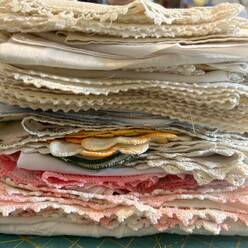
It is not. As an adequate hand-stitcher I understand the skill, labour, time and patience that goes into each linen. I understand the desire to cherish these vintage domestic-craft objects made for the joy of it that are eventually passed around and down the generations only to be hidden in some drawer or closet. I understand the impulse to rescue them from the humiliation of their thrift-store price tags of maybe five dollars.
Cutting through all these layers of meaning feels a little like slicing into someone else’s skin. What right do I have?
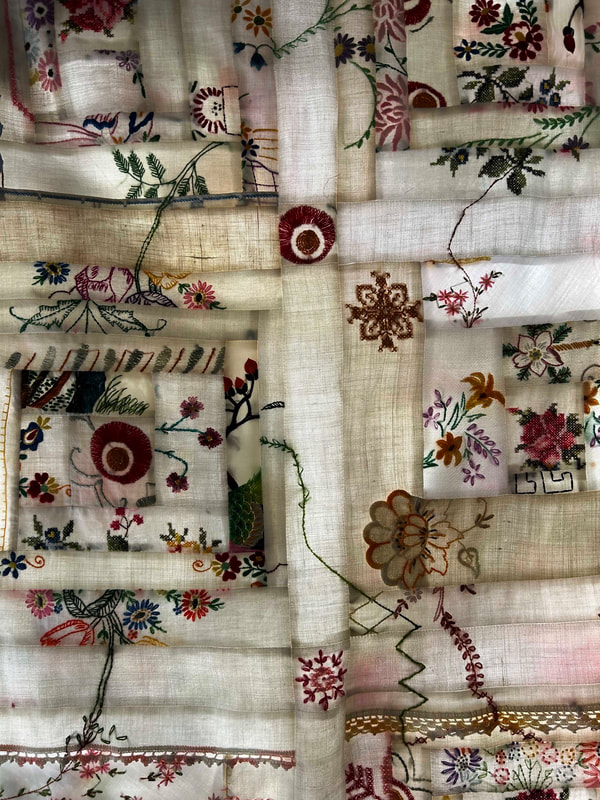
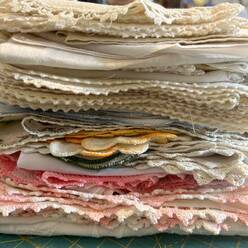 Am I ruining family heirlooms? Or daylighting unused linens that have been in the dark for decades? (Carlyn Yandle photo)
But the weighty, pristine Irish linen tablecloths that bloom with finely stitched bouquets and drawn threadwork borders are quite another thing. I take a deep breath and make mental apologies and thanks to the unknown or long-gone maker. I remind myself that I’m not ruining a family heirloom but daylighting the work of handmade things that have been in the dark for decades. Then I let the rotary-cutter rip. I am Edward Scissorhands. I can’t help myself. Sorry, not sorry.
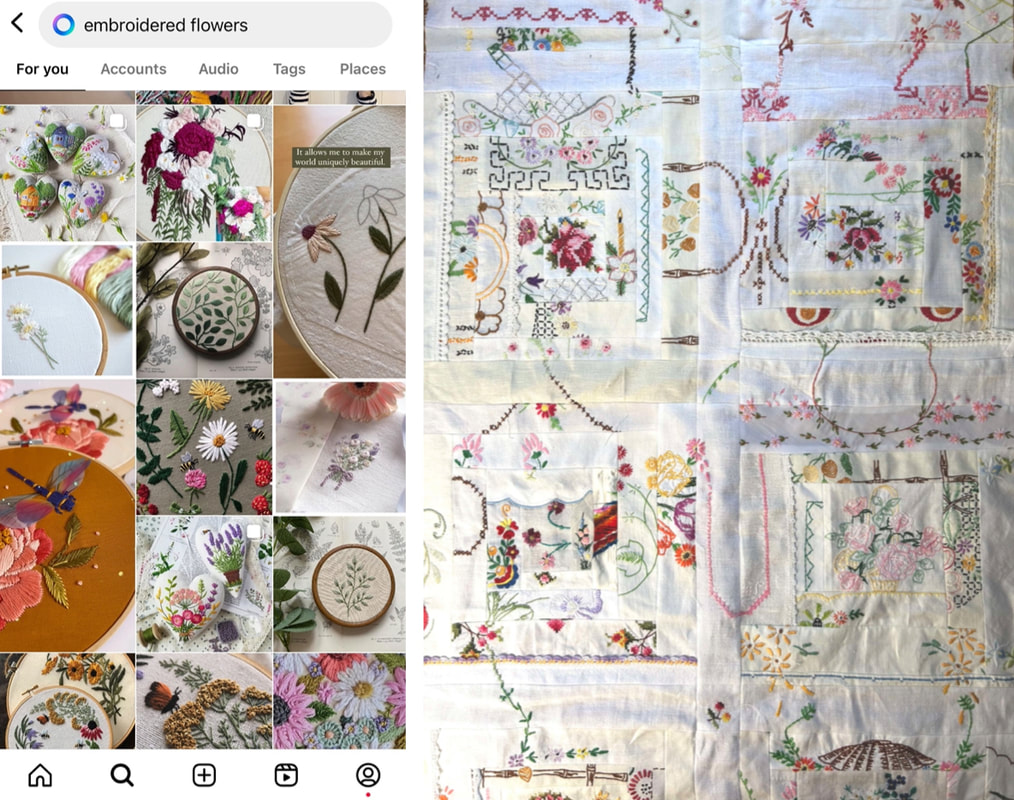
This is the struggle behind Forage, an under-construction field of improvisational log-cabin blocks in my preferred scale of queen-sized. Each embroidered scrap is a literal snippet of a larger piece, the analogue equivalent of a digital thumbnail image. Machine-stitched together the blocks are as cacophonous as an Instagram Explore field.
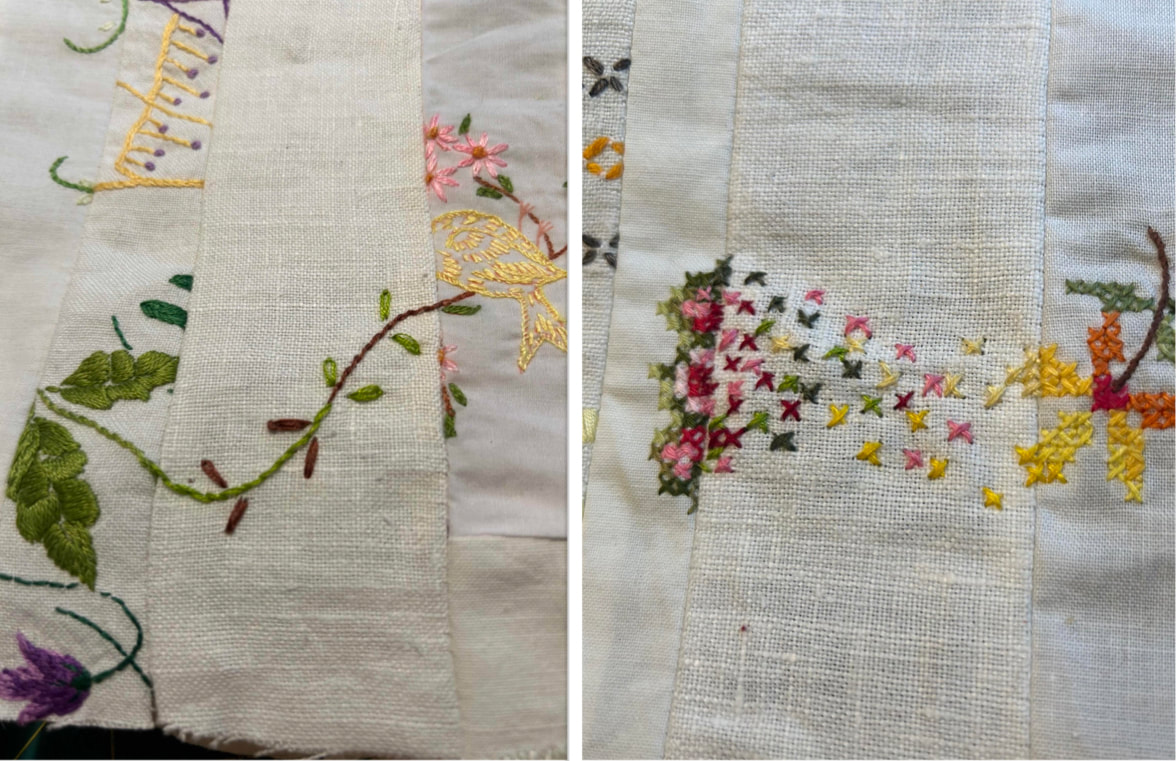
Despite the garden-plot references, this work is defying the horizontal, offering a reverse-side textural experience of an unstable grid of frayed edges. The maker-contributors never intended for the ‘wrong side’ to be seen, but when it’s all brought into the light, the translucent stained-glass effect cannot be denied. Suddenly I see connotations of religious symbolism, and I’m wondering about the power of the loose threads and those cryptic-looking stitches when viewed from behind the scenes. Something about sacrifice or at least about having faith that the discomfort in detaching from nostalgia is for good, not evil.
That openness is rich ground, another area to forage.
Recent Comments