
|
You know you’re aching to get going/growing when you and your artist friends are more enthused about a trip to Home Depot for potting soil than an art show opening. You know it when your desktop is suddenly stacked with images of art that lives outdoors, in the midst of natural and tended landscapes. We want to make, we want to be inspired but mostly we want it to all happen out there.
Artists’ gardens I have known may be overgrown shambles or even slightly freaky spaces but they are never manicured hedges and putting greens. They are spaces of adventure and surprise and they take me back to my artist father’s East Van oasis, where my brother and I would get lost in the winding path that held treasures like his concrete head planters with greenery erupting out of the heads like Sideshow Bob hair. Artist gardens often have the feel of public art spaces in miniature, spaces of experimentation with form and materials, maquettes for possible large-scale works. |
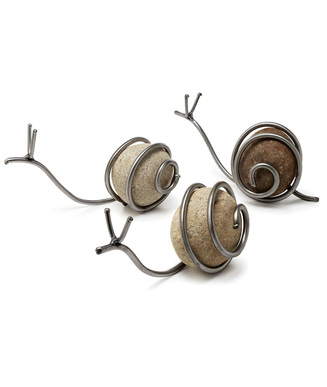
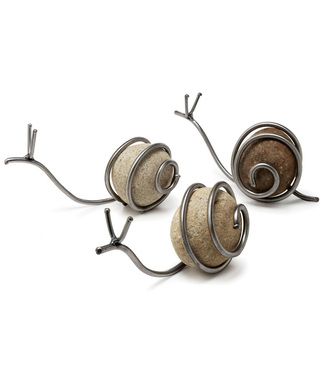
The discovery of these tiny simple sculptures in a garden would create surprise through unexpected form and the power of multiples, while referencing their particular space.
|
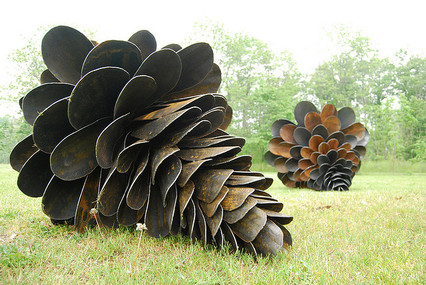
It’s the site specificity and the element of surprise that makes any outdoor space sing, whether that’s in the use of materials and scale, like the giant pinecones (above) that Ontario metal artist Floyd Elzinga fabricates from shovels, or the juxtaposition of the object and the natural surroundings, like the firepit below. (I’m filing this mass-produced, buy-online item, credited only to “an artist” in Tennessee, under Accidental Art.)
It’s something to contemplate while I look at all the unidentifiable weedy things already going to seed in my little space.

This globe fire pit will not be ignored — not because of scale or materials but concept. That and the scary inferno.
|
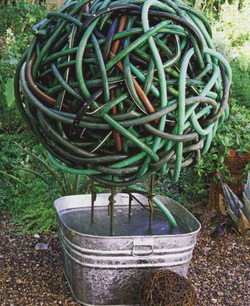
This hose topiary references its particular space through use of materials and is just weird enough that it works for me. (Artist’s name lost in the Pinterest jungle.)
|
Recent Comments