
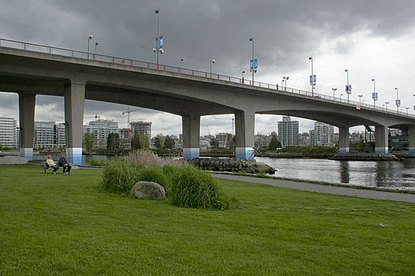
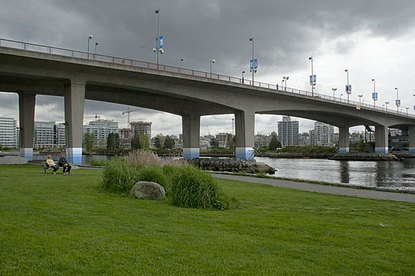
 Pretty, and pretty alarming stripes show future water levels.
There’s an eerie calm here, a feeling like we may be next, despite the interception of a Canada Day plot of lethal destruction in our provincial capital. The regular warnings about the impending Big One is unnerving; even a walk on the seawall is a reminder that this will all be underwater, thanks to the 2012 CIty of Vancouver-commissioned public artwork by Rhonda Weppler and Trevor Mahovsky. The deceptively attractive blue stripes on the Cambie bridge pilings that is A False Creek serve as a shocking visual of what scientists are saying is the inevitable rise in sea levels due to global warming. We live in a safe corner of the world, but now we’re more likely to include the word ‘still’ in that statement.
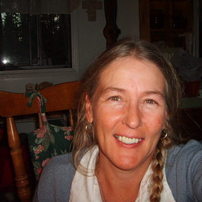 Alaskan Tentlady’s selfie
I seek and find them on places like treehugger.com and instructables.com, where Wasillia, Alaska handygal Alaskan Tentlady (real name not posted) shares her step-by-step directions for making a Gertee (Mongolian for ‘relaxing at home’, as it turns out), a hand-built portable home for cold weather, made out of recycled materials. (Lately she’s been working on adapting this ancient and universally-used dwelling to house homeless teenagers in her region.)
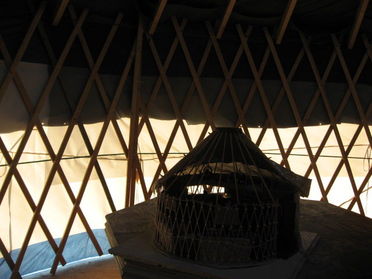
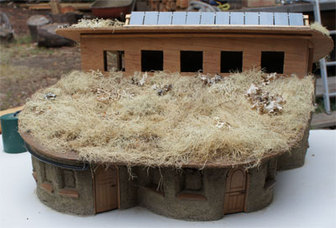
Vancouver Islanders Gord and Ann Baird also share their model of a cob house and living roof in their ultra-green cob house (below) at their blog that defies living with a heavy reliance on fossil fuels. The maquettes are exquisite sculptural works in themselves, made of pure heart, with no irony aftertaste.
Imagine the opening night: the cross-pollination of ideas and process, all these non-conformists who might balk at the label of artist collaborating with other likeminded people who are not simply awaiting the apocalypse but picturing the possibilities.
Recent Comments